The product
Six parts that already agree with each other.
Each is useful on its own. Together they remove the exports, the rekeying and the monthly argument about whose number is right — because there is only one number.
Hiring
Advertise, shortlist, and stay on the right side of the law.
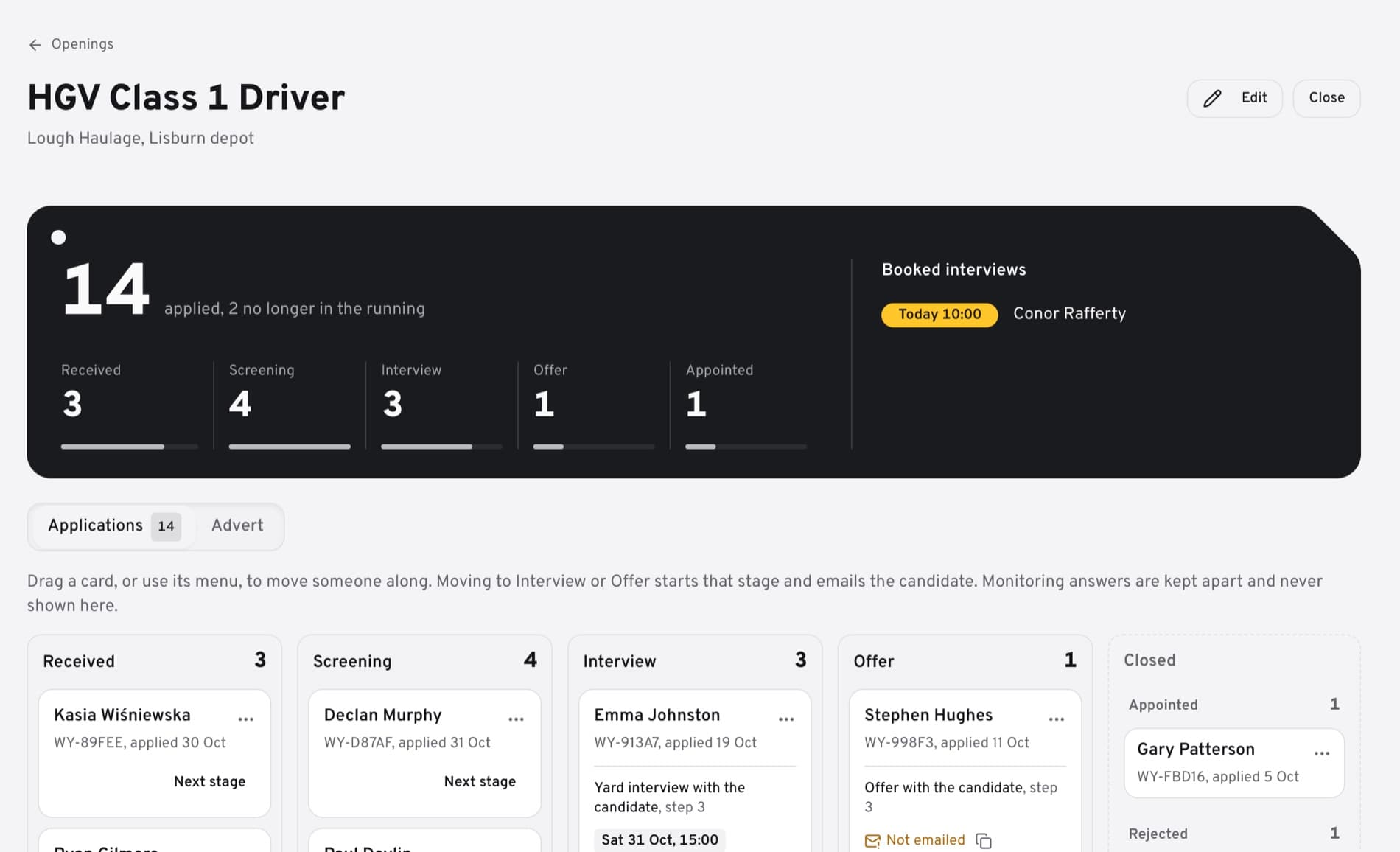
Jobs go out on a careers page you control, applications come back answering the same questions in the same order, and the monitoring information you are obliged to collect never reaches the people doing the shortlisting.
- A careers page for each company you run, at your own web address if you want one
- The same questions for every applicant, so you are comparing like with like
- Stages you name yourself, and a reply deadline that closes on its own
- Equality monitoring kept away from the people making the decision, as the law requires
- Candidates click the link in their email — no account to create, no password to forget
Time
The week, closed on time.
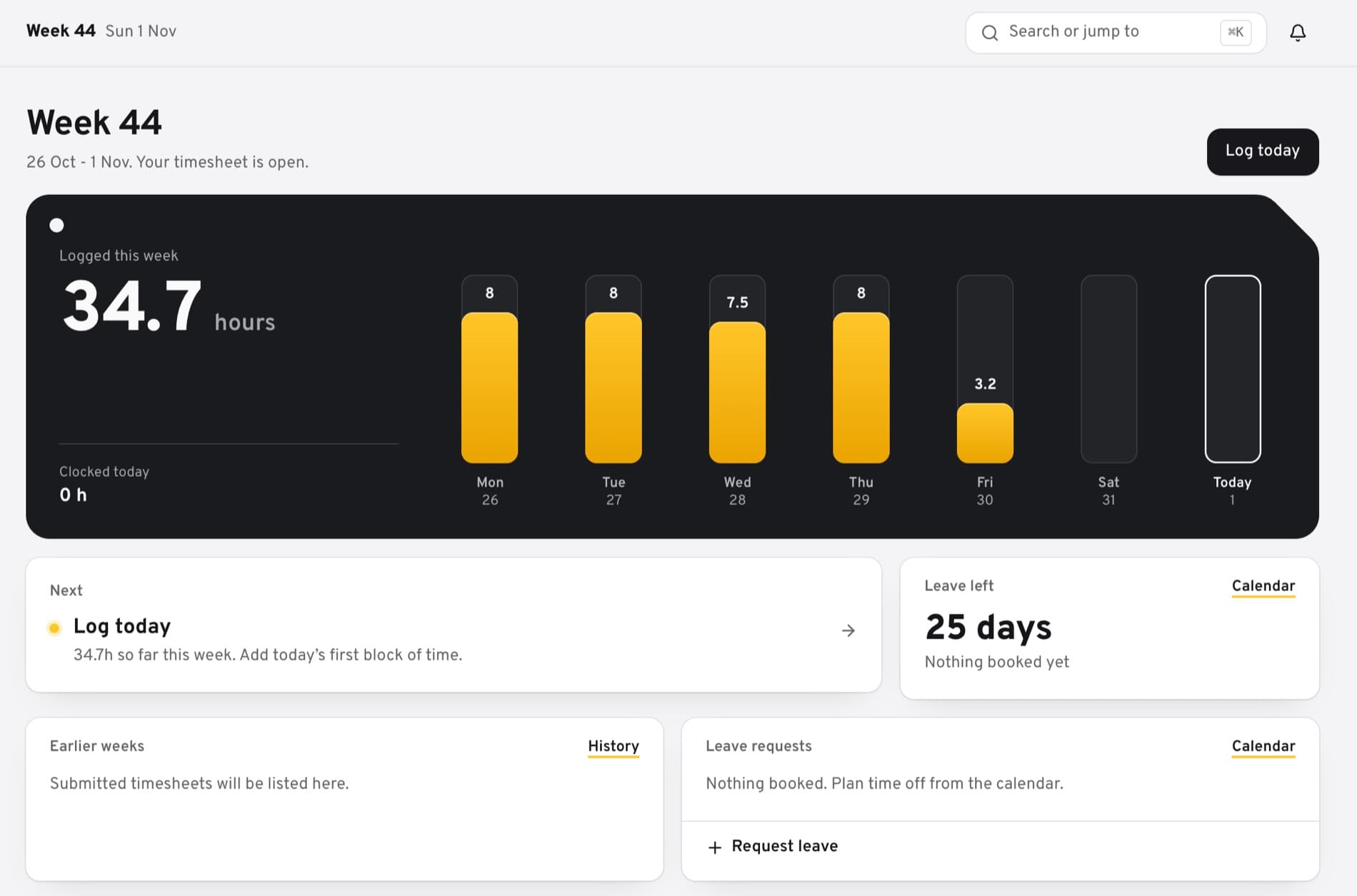
Timesheets run Monday to Sunday. They open, they get submitted, they get approved — and once a week is approved it locks, so the number payroll reads is the number the manager actually signed off.
- Open, submitted, approved — and anything sent back comes with the reason attached
- Overtime and shift-swap requests land with the manager who is responsible for that person
- A live view of who is clocked in, and whose week is still sitting open
- Rotas that repeat on a cycle, with separate groups and one-off exceptions for odd weeks
- Projects and jobs to book hours against, so you can see where the time actually went
Absence
Entitlement that adds up.
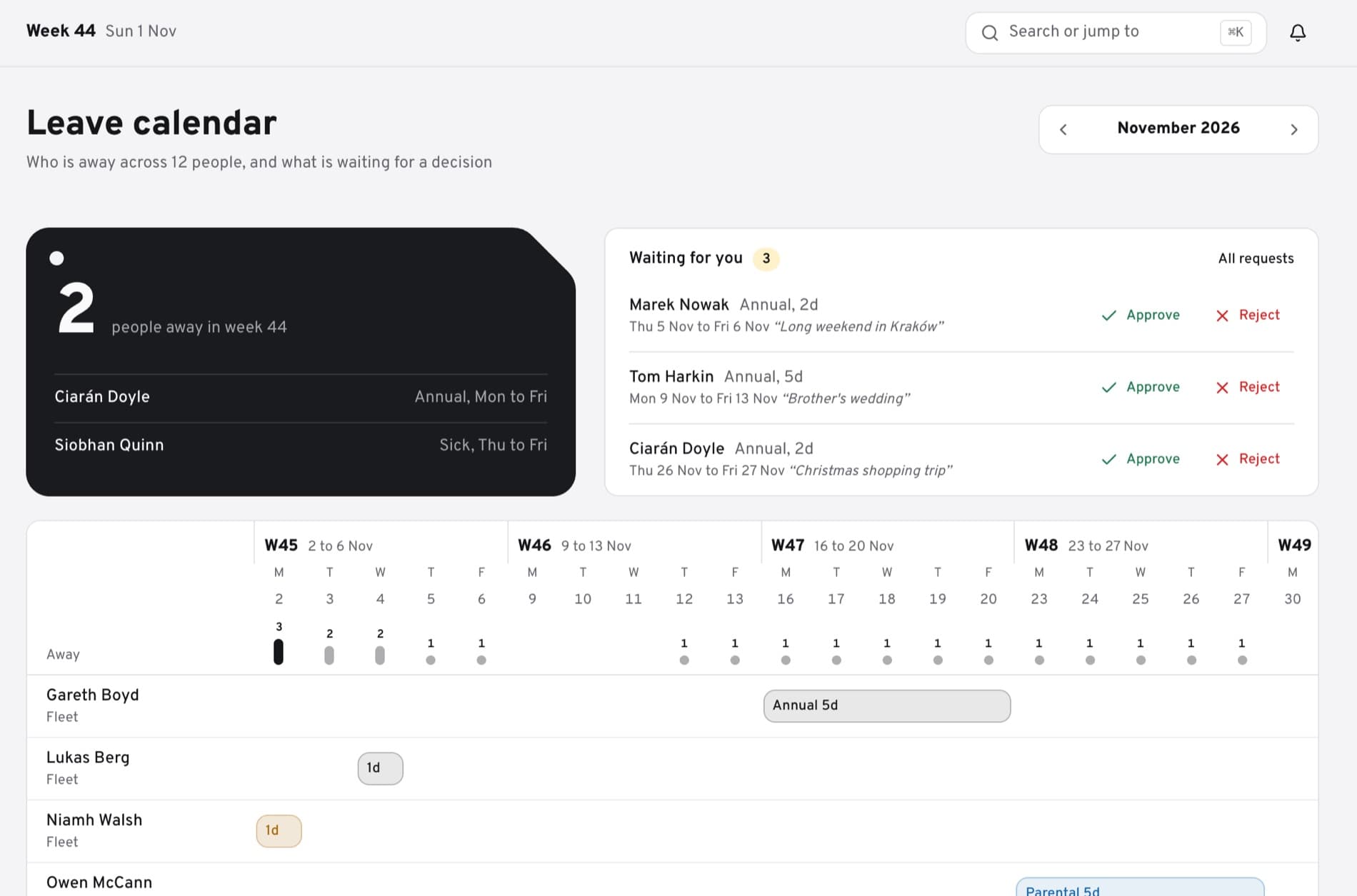
A leave balance is a sum, not a cell in a spreadsheet. Carry-over, adjustments, requests still waiting and bank holidays all move it — and everybody is looking at the same answer.
- Requests booked against a live balance: entitlement, adjustments, carry-over, taken, pending
- Carry-over with a cap and an expiry date, counted from your own leave year
- Bank holidays that come out of entitlement — or an approved opt-out that does not
- Annual, sick, unpaid, compassionate, maternity, paternity and parental leave
- Policies set per company, overridden per team where a team genuinely works differently
People
One directory, however many companies.
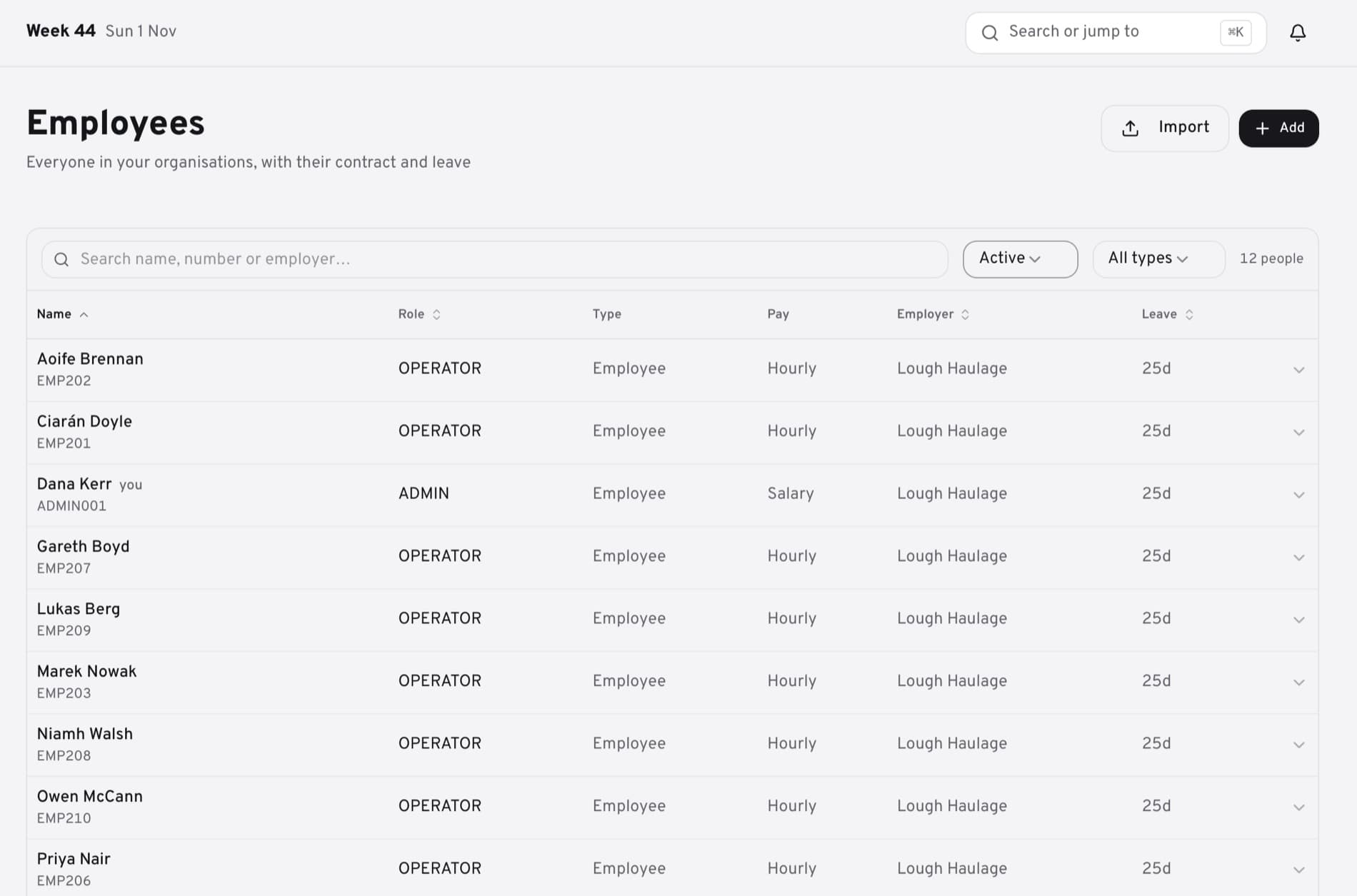
A group running several trading companies should not be running several HR systems. Everybody has one employer that owns their payroll, and can do work for any of the others without being moved.
- Employees, teams and team leads, with approval rights that follow that structure
- One employer per person, which owns their payroll, their holidays and their leave policy
- People can work across the rest of the group without being moved or duplicated
- Nine levels of access, from the owner down to someone who can look but not touch
- Switch features on for one company or one team, so a rollout can be gradual
Expenses
To the penny, at the right rate.
Claiming money back is a proper piece of work with somebody submitting, somebody approving and cash at the end of it. Every claim reconciles exactly, and nothing is left rounded.
- Receipts and mileage on the same claim, approved by whoever is allowed to approve it
- HMRC mileage rates built in, including the drop after 10,000 business miles in a tax year
- A journey that crosses that threshold is paid at both rates, not rounded to whichever it hit
- The rate is fixed when the claim is submitted, so changing it later cannot revalue old claims
- Receipts kept with the claim, rather than on somebody’s phone or in a shared drive
A 700-mile month, in March
Already claimed this tax year: 9,600 mi
10,000 mi
- 400 mi at 45p
- 300 mi at 25p
- 400 × 45p
- £180.00
- 300 × 25p
- £75.00
- What Weekyard pays
- £255.00
A flat 45p across the boundary pays £315.00. The extra £60.00 is not a bonus — it is a taxable benefit the employee has to account for.
Pay
Payroll that reconciles.
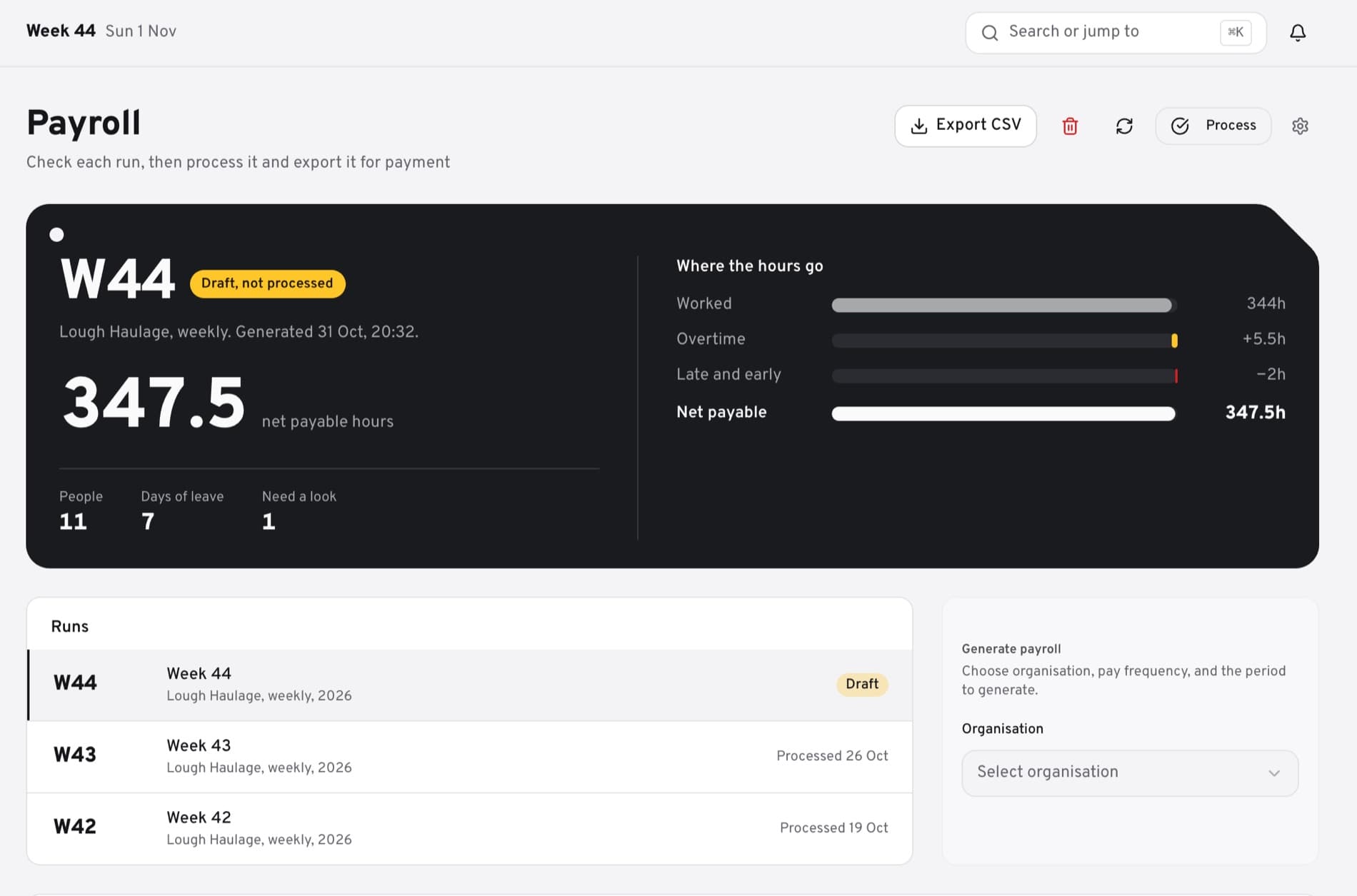
Weekyard does not file with HMRC for you. It hands whoever runs your payroll a set of figures they can key straight in, without chasing anybody, with the dated detail sitting underneath every total.
- Monthly runs for salaried people and weekly for hourly, from the same approved weeks
- Payroll weeks counted from your own tax year start rather than from January
- Scheduled, worked, overtime, late and early-leave hours, net payable, and the variance
- A dated breakdown per person for everything that is not ordinary work
- Export straight to Excel, and reporting across every company at once
Read the list, then try the thing.
Feature lists are easy to write and hard to trust. A trial has all six parts switched on, so you can check every line above against the product itself.
No card required. From £6 per person a month plus VAT afterwards, minimum 10 people.